
Understanding molecular mechanisms of cellular senescence and skin aging and disease
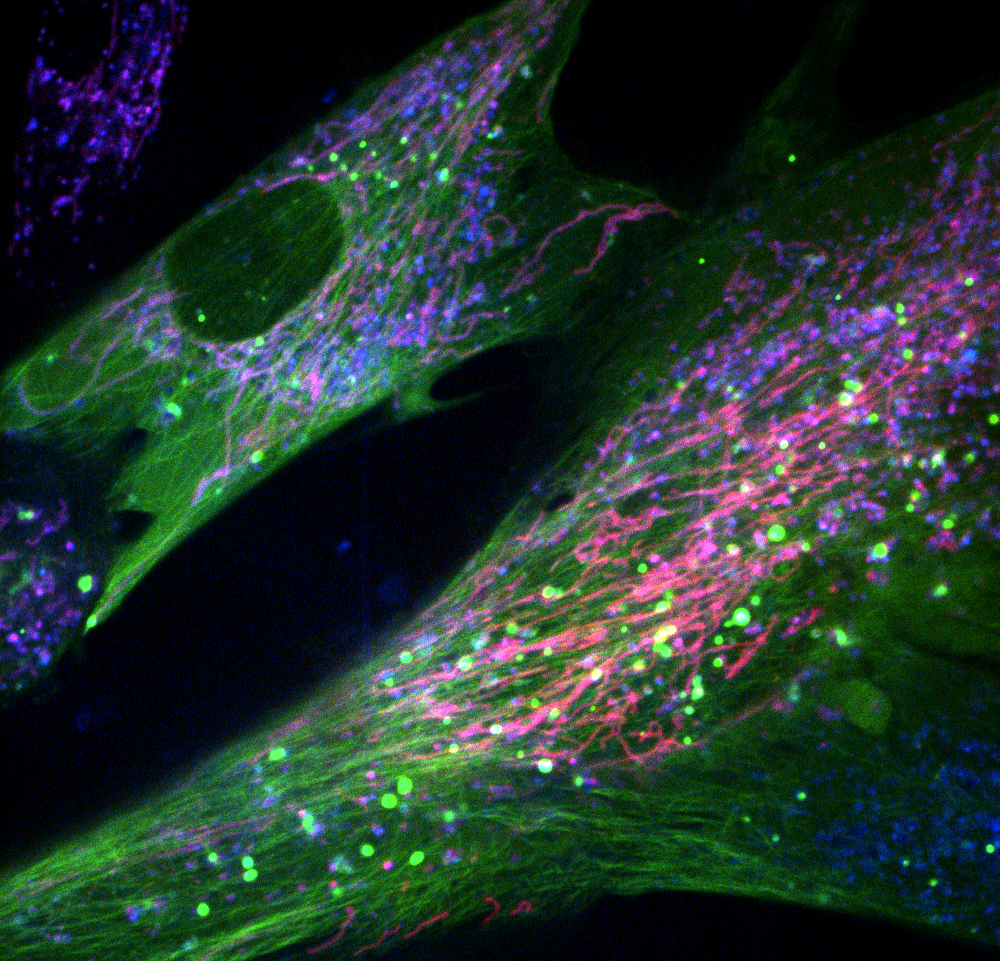
What is the contribution of senescent cells to processes such as skin aging and age-related diseases?

Senescence and mitochondria
Mitochondrial dysfunction is considered one of the hallmarks of cellular senescence. Using different approaches and senescence models we investigate several aspects of mitochondrial physiology and morphology and how changes in these aspects affect cell homeostasis and the skin environment.
SASP: soluble factors and extracellular vesicles
The senescence-associated secretory phenotype (SASP) refers to the collection of soluble factors and extracellular vesicles (EVs) released by senescent cells. These secreted elements, which include cytokines, growth factors, and proteases, play a critical role in cell-to-cell communication and can influence the behavior of surrounding cells. SASP components can promote inflammation, tissue remodeling, and even tumorigenesis, making them key players in aging and age-related diseases. Understanding SASP is essential for developing therapeutic strategies to mitigate its detrimental effects on tissue health and function.

Skin cells
The masterplayers of skin
Skin and its derivatives (eccrine sweat glands, hair and hair follicles, nails and sebaceous glands) constitute a complex organ composed of many different cell types that forms the barrier that segregates the body from the outer surroundings.
Keratinocytes and melanocytes are epidermal cells. Keratinocytes are responsible for the synthesis of keratins, intermediate filaments that confers toughness to the skin. Melanocytes are responsible for the production of melanin, the pigment that
gives color to the skin.
Fibroblasts, the most common cell type of the dermis, are morphologically heterogeneous cells responsible for synthesis and secretion of extracellular matrix (ECM) proteins such as collagen, elastic fibers, fibronectin, glycosaminoglycans, and proteoglycans.


All rights reserved – Dr. Maria Cavinato

