
News
13/02/2024
New Commentary in “The FEBS Journal”
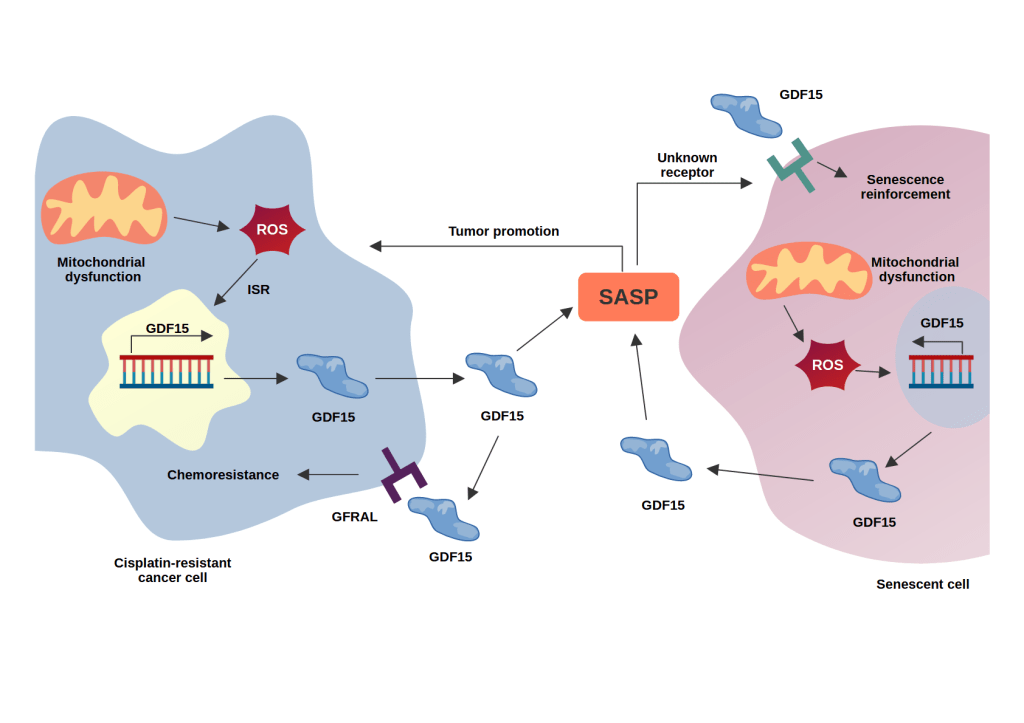
Gastric cancer is a major global health concern and the second leading cause of cancer-related deaths worldwide. Understanding the molecular mechanisms involved in the development and progression of gastric cancer is crucial for developing effective diagnostic and therapeutic strategies.
Growth/differentiation factor-15 (GDF-15), a member of the transforming growth factor-beta superfamily, has emerged as a multifaceted protein with diverse roles in cellular processes and disease states. It is regarded as a stress-responsive cytokine induced by factors such as mitochondrial dysfunction, cellular stress, inflammation, or activation of the mitochondrial unfolded protein response (UPRmt) pathway and has recently garnered increasing attention due to its implications in various physiological and pathological contexts such as aging and cancer.
In this commentary, Maria Cavinato highlights the findings of Wang et al. which demonstrate that GDF15 upregulation is associated with cisplatin insensitivity, mediated by the ATF4-CHOP pathway and reactive oxygen species-activated general control nonderepressible 2 [Wang S-F et al. (2023) FEBS J, https://doi.org/10.1111/febs.16992%5D. Connecting these insights, we explore the broader implications of GDF15 expression in the aging-cancer axis, particularly its involvement in cellular senescence and the senescence-associated secretory phenotype (SASP).
For the full commentary, please assess: https://febs.onlinelibrary.wiley.com/doi/10.1111/febs.17087
18/01/2024
And it’s out! Our latest manuscript describing the intricate relationship between UV radiation and urban particulate matter in human dermal fibroblasts has just been published in Aging Cell.
In this study, we show that treating fibroblasts with subcytotoxic doses of UVA/UVB leads to mitochondrial dysfunction, increased ROS levels, and DNA damage. Interestingly, simultaneous UPM treatment of UV-irradiated cells selectively inhibited autophagic flux, altering the fate of a fraction of the cell population from senescence to apoptotic cell death.
Our findings emphasize the need to consider both environmental stressors when assessing mechanisms of extrinsic skin aging.
Read the full manuscript at:https://lnkd.in/dZdE7h5W

09/01/2024


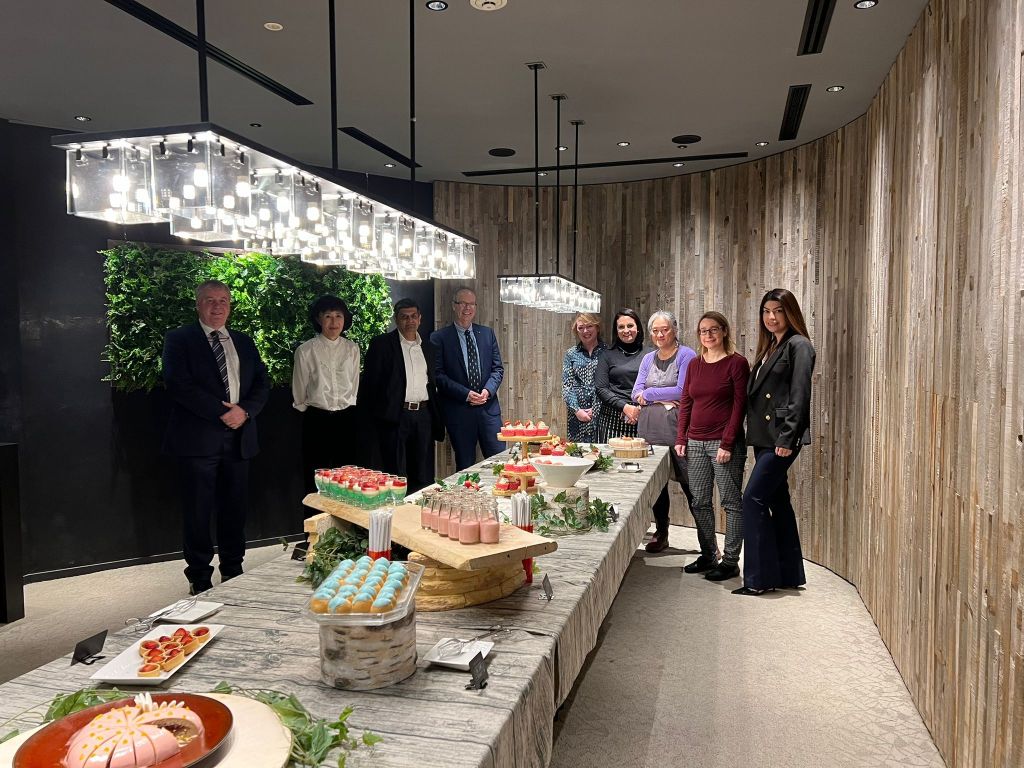
Our group participated in the First Meeting of the Anglo-Japanese Global Partnership Award Group in Tokyo. During the event, Maria had the chance to present our latest findings on mechanisms of intercellular communication in skin aging and disease. The exchange of ideas was truly invigorating, and the feedback received was excellent.
The discussions revolved around diverse projects related to various aspects of aging, ranging from research on progeria, centenarians, and supercentenarians to delving into the intricacies of skin aging and aging of tendons in both humans and horses. The breadth of topics covered was truly inspiring.
15/11/2023
Check out our new publication!

We are pleased to announce the recent publication of our comprehensive review manuscript, titled Mitochondrial Dynamics and Metabolism Across Skin Cells: Implications for Skin Homeostasis and Aging, in Frontiers in Skin Physiology.
Aging of human skin is a multifaceted process that results in a decline in the homeostasis and regenerative potential of this vital tissue. Disturbances in mitochondrial function are recognized contributors to aging and inflammation of the skin. This, in turn, leads to the impairment of physiological skin function and the onset of skin pathologies. Our review provides a comprehensive examination of the essential role played by mitochondria in different skin cell types and underscores how the impairment of mitochondrial morphology, physiology, and metabolism in each cellular compartment contributes to the intricate process of skin aging.
For those interested in the detailed exploration of mitochondrial dynamics across skin cells, please find the complete manuscript here.
Continue to follow our website and social media channels for updates on groundbreaking research in skin physiology.
25/07/2023

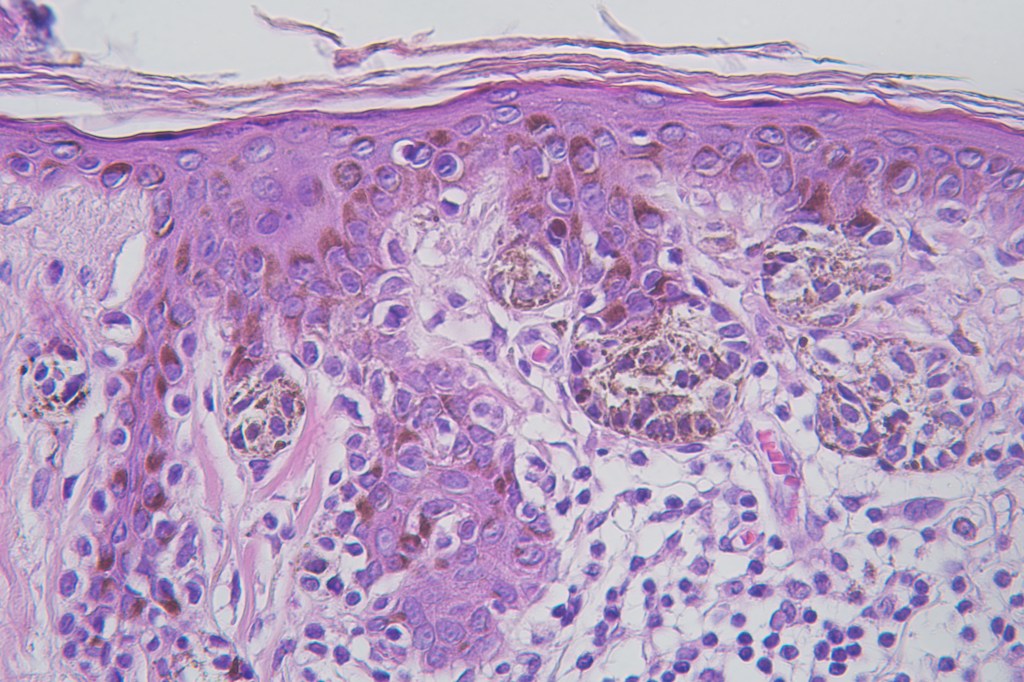

Six months ago, our dedicated PhD student, Ines Martic, embarked on an enriching stay abroad at the Hospital Instituti Fisioterapici Ospitalieri (IFO)-San Gallicano. Under the guidance of Dr. Barbara Bellei, Ines had the opportunity to work at the Department of Cutaneous Physiopathology and Integrated Center of Metabolomics Research in Rome.
During her stay, Ines learned various techniques to study melanocytes and fibroblasts from renowned researchers, significantly enhancing her understanding of melanocyte biology and skin aging. The experience also facilitated fruitful collaborations for future projects in skin cancer and skin aging, allowing for the exchange of valuable experiences, techniques, and shared interests.
Ines was supported by a scholarship from the Aurora Program of the University of Innsbruck throughout her internship. As her stay came to a close, her supervisor and friend, Maria Cavinato, delivered a captivating talk at the Hospital, sparking numerous ideas and collaborative initiatives.
In addition to her academic endeavors, Ines also had the opportunity to explore the beauty of Rome, sharing memorable moments and building strong bonds of camaraderie with her supervisor.
We take great pride in Ines Martic’s achievements during her time at IFO-San Gallicano and eagerly anticipate the positive impact of this collaboration on the advancement of science and research.
This experience marks a significant milestone in her academic journey, and we extend our heartfelt gratitude to all who supported and contributed to this fruitful endeavor.
24/05/2023
Attention to all skin physiologists, researchers, and experts! We at Frontiers in Skin Physiology are delighted to announce our upcoming research topic on “Aging Skin Physiology: Spotlight on Prevention and Management”. As we all know, skin aging is a dynamic and complex process caused by both intrinsic and extrinsic factors. We are particularly interested in exploring the mechanisms behind genetic and epigenetic changes in skin aging that lead to the impairment of skin barrier, extracellular matrix, autophagy, neuro-endocrinology, metabolism, and cellular senescence.
We invite you to submit your original contributions and reviews that explore the physiology, prevention, and management of skin aging. We are interested in various anti-aging interventions such as photoprotection, cosmeceuticals, topical agents, nutraceuticals, and energy-based devices that may help reverse skin aging-related skin pathologies, including wound healing and skin cancer. Your contributions will aim to better understand the physiology of aging skin and eventually help prevent and reverse skin aging. Let’s work towards healthier and younger-looking skin together!
Deadline for submission: 28 July 2023
More info at: https://www.frontiersin.org/research-topics/49502/aging-skin-physiology-spotlight-on-prevention-and-management
22/12/2022
Check our latest publication “Depletion of growth differentiation factor 15 (GDF15) leads to mitochondrial dysfunction and premature senescence in human dermal fibroblasts“ in Aging Cell

Growth differentiation factor 15 (GDF15) is a stress responsive cytokine, a mitokine and a prominent senescence-associated secretory phenotype factor. Elevated GDF15 plasma levels are a concomitant feature of many diseases, age-related disorders and aging in general. The basic biological functions and implications of GDF15 and its role in aging and senescence, however, are still under investigation. In this study, using human dermal fibroblasts, we show that GDF15 plays a role in the process of skin aging, as deletion of GDF15 leads to cellular senescence of these cells accompanied by mitochondrial impairment and influences tissue structure in a 3D reconstructed skin model. This results suggest GDF15 as a potential target for senotherapeutics intervention.
 Cavinato Lab