
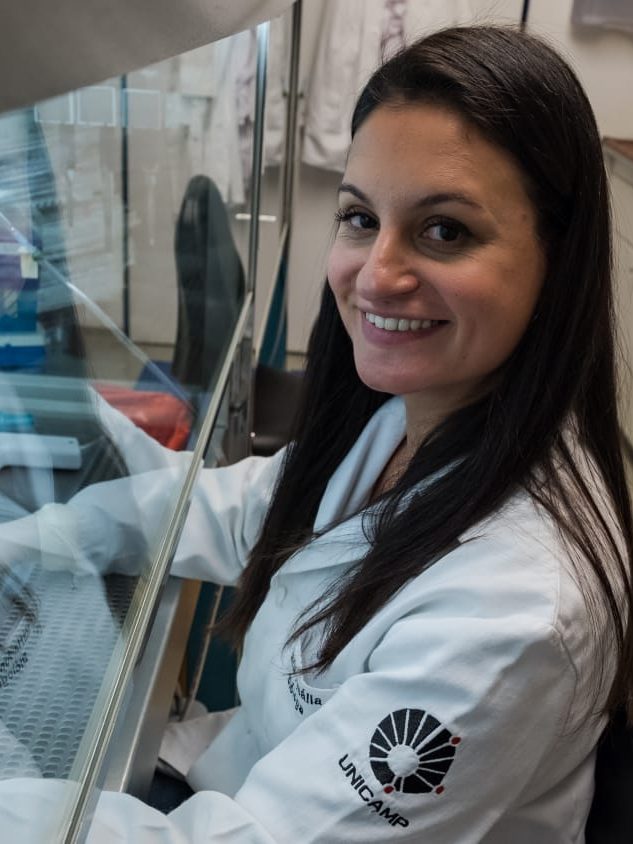
Maria Cavinato received a Ph.D. in Medical Sciences in 2016 and acts as the head of the Laboratory since 2020. She is an expert in cellular senescence and skin biology and has longstanding experience in studying links between mitochondrial function, proteostasis and cellular senescence. Additionally, she established 3D skin equivalent models using different approaches in the group. Maria Cavinato has supervised several master and PhD students, has participated as main and co-author of several important publications in the fields of cellular senescence and skin biology and has established multiple national and international collaborations with reputed scientists. She serves as a Section Editor for Experimental Gerontology and Frontiers in Skin Physiology and participates as ECI co-coordinator in the EU COST action European Network for Skin Engineering and Modeling (NETSKINMODELS).
Post Docs

Lena Guerrero-Navarro has joined the laboratory as a Ph.D. student in 2020. Her research focuses on the mechanisms of extrinsic aging, with a particular emphasis on cellular senescence and lysosomal physiology. Lena has developed expertise in working with skin equivalents and ex vivo skin models, where she explores how external factors contribute to skin aging and cellular dysfunction. Her work is pivotal in uncovering new insights into the aging process and developing strategies to combat age-related changes in the skin.
Ph.D Students
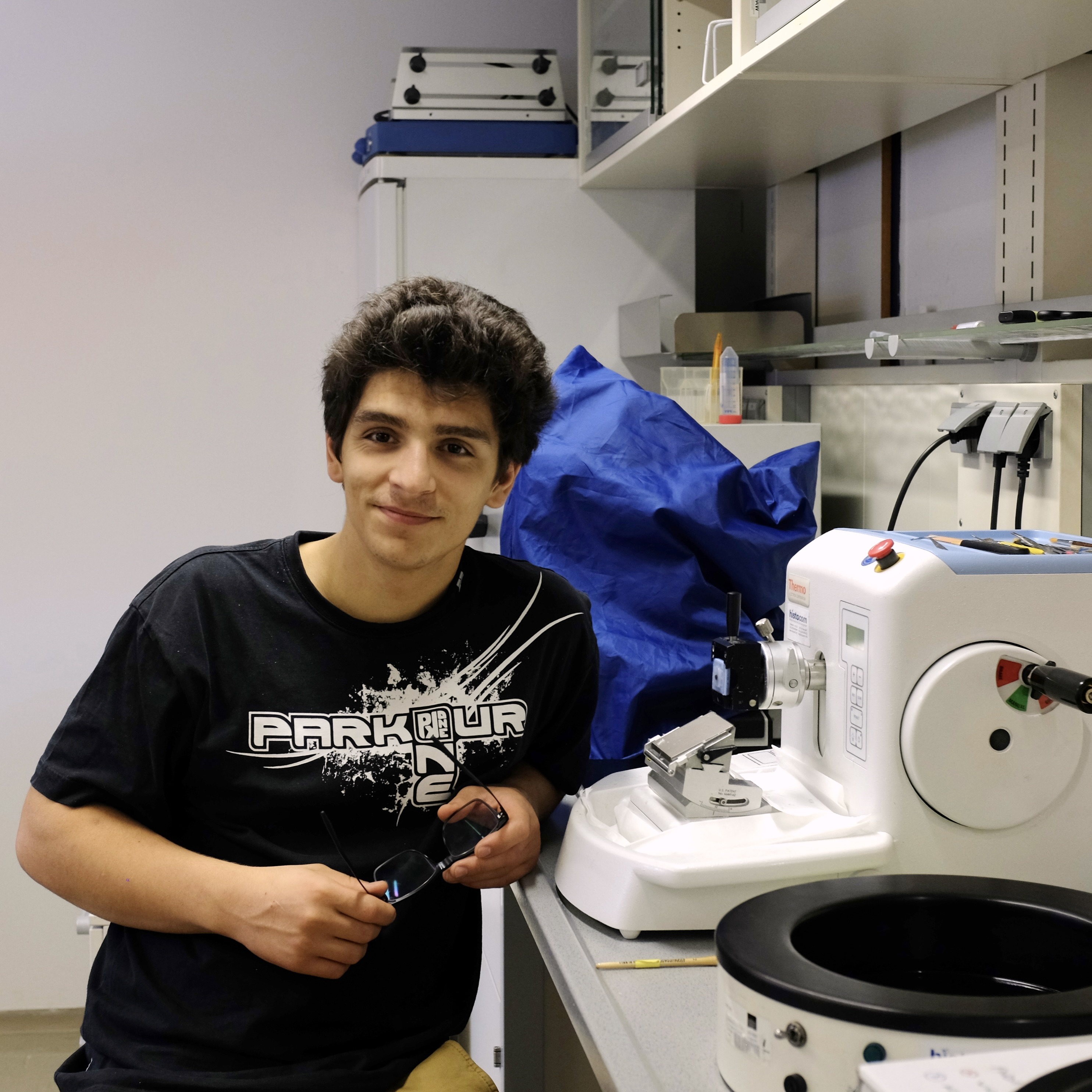
Elia Cappuccio has been an integral part of our laboratory since 2017, starting as a project student before advancing to a Master’s program. During his Master’s studies, Elia focused on investigating the mechanisms of cellular senescence and mitochondrial metabolism in mouse embryonic fibroblasts. His dedication to understanding these complex processes led him to continue his research as a Ph.D. student in our lab starting in 2022. Elia’s current work involves exploring mitochondrial metabolism across various mouse tissues. Additionally, Elia is involved in the identification of senescent cells in skin tissue using label-free and non-invasive methods.
Master Students
Juliane Gasser joined our laboratory in 2022 as a project student and has since advanced to a Master’s program in 2023. Her research centers on two critical projects: the characterization of premature senescence in dermal fibroblasts from patients with atopic dermatitis and the investigation of how lifestyle interventions, such as smoking cessation and caloric restriction, affect skin aging and homeostasis.
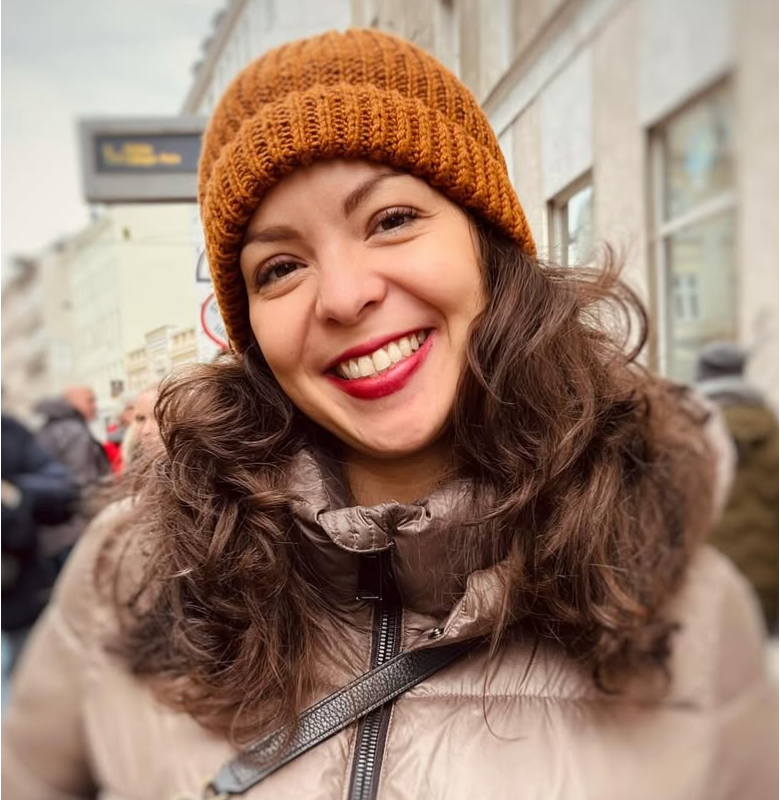
Amina Hassan joined the laboratory in early 2024 as a Master’s student and has since become an important contributor to our work on melanocyte biology. Her project focuses on developing melanocyte spheroids and refining our pigmented 3D skin cultures, with the goal of creating more physiologically relevant models of pigmentation and skin aging. Amina is steadily expanding the lab’s technical repertoire and strengthening our efforts to understand how melanocytes respond to environmental and intrinsic stressors.
Alumni
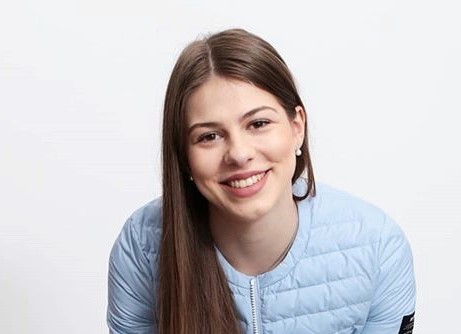
Ines Martic joined the laboratory in 2018 and has been an integral part of its development. She began as a project student and completed her Master’s degree in Molecular Biology in 2020, after which she continued her work in the group as a PhD candidate. Throughout her doctoral project, Ines focused on cellular senescence, melanocyte biology, and the mechanisms driving skin aging. She developed strong expertise in 3D skin equivalents and ex vivo skin models and made important contributions to understanding how UV radiation and environmental stressors shape melanocyte function and senescence. Ines defended her PhD in 2025 and is now part of the Cavinato Lab alumni.

Sophia Wedel joined the laboratory in 2016 as a Master’s student and continued her scientific path in the group as a PhD candidate from 2017 onward. She completed her doctoral degree in 2021 and remains an important part of the Cavinato Lab’s history. During her time in the lab, Sophia played a key role in advancing our work on oxidative stress-induced senescence in fibroblasts and was instrumental in establishing our 3D skin models. Her contributions laid essential groundwork for several ongoing projects and continue to influence the direction of our research.
 Cavinato Lab